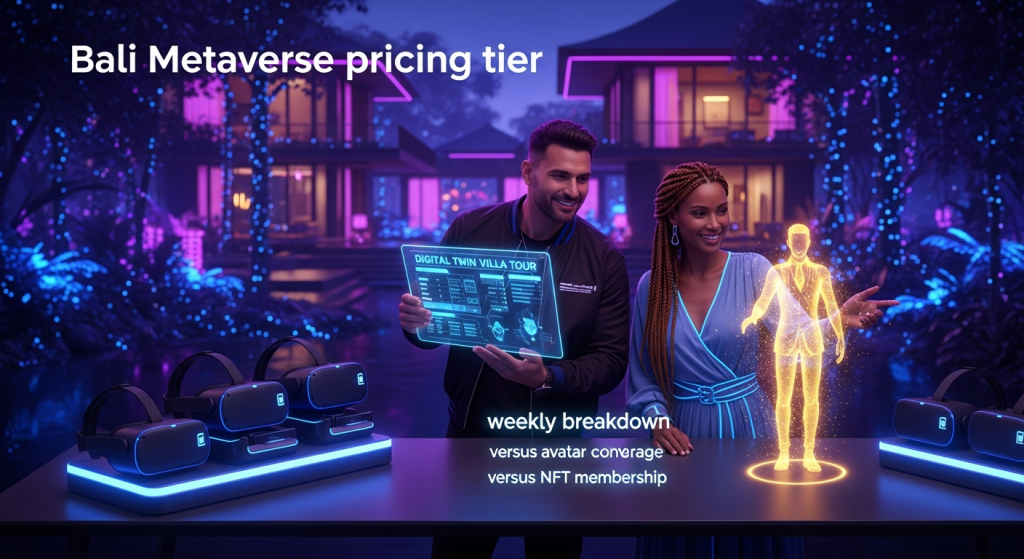
- Basic digital twin property tours begin at approximately USD 15,000 to USD 40,000.
- Immersive XR tourism experiences for hotels start from USD 50,000 to USD 150,000.
- Full Web3 platform development with NFT integration often exceeds USD 250,000.
The air carries the scent of frangipani and the distant hum of scooters as the sun crests over the Bukit Peninsula. Here, the physical and digital converge, creating a new frontier for luxury tourism and real estate. This guide illuminates the financial landscape for establishing a presence within the bali metaverse, detailing the investment required for pioneering digital experiences.
Understanding Your Bali Metaverse Investment
Launching into the bali metaverse represents a strategic investment in the future of digital engagement, particularly for the discerning audiences of luxury tourism and high-end real estate. This platform offers a seamless extension of Bali’s physical allure, transforming properties and experiences into accessible digital assets. A foundational investment typically covers the initial scanning, 3D modeling, and interactive environment creation. Consider a mid-sized villa in Pecatu, approximately 20 kilometers from Ngurah Rai International Airport (DPS), requiring a high-fidelity digital twin. Such a project begins at an estimated USD 15,000, encompassing detailed architectural rendering and basic navigation features. This initial outlay secures a permanent digital presence, a virtual counterpart reflecting the property’s design and spatial characteristics. The scope significantly influences the total expenditure; a sprawling resort in Canggu, covering 5 hectares, naturally demands more extensive modeling and integration, potentially pushing the entry cost to USD 40,000 or more for its digital twin.
The value proposition extends beyond mere visualization; it involves creating a dynamic, interactive space. Developers building luxury residences on the Bukit Peninsula now explore digital twins as core marketing tools, showcasing unbuilt properties to global investors. These digital twins can integrate real-time data feeds, displaying construction progress or even simulated views from future balconies. The development timeline for a standard digital twin ranges from 6 to 12 weeks, depending on complexity. Our Singapore Web3 HQ coordinates these sophisticated projects, ensuring international standards of data security and blockchain integration. For instance, a basic digital twin of a 3-bedroom villa, approximately 300 square meters, costs between USD 15,000 and USD 25,000. This includes architectural modeling, interior furnishing replication, and a navigable virtual tour accessible via web browsers or VR headsets. Companies like Matterport provide foundational scanning technology, which we then enhance with bespoke interactive layers. This initial cost often includes 3 months of platform hosting and basic analytics, tracking visitor engagement and popular virtual viewpoints within the digital space.
Tier 1: Foundations – Digital Twins & Virtual Showrooms
The entry point into the bali metaverse for property developers and smaller hotel groups focuses on establishing a robust digital twin and virtual showroom. These services transform physical assets into highly accurate, navigable 3D models, offering access to potential buyers and guests worldwide. A typical project starts with comprehensive 3D scanning of the physical location. For a boutique hotel in Ubud, known for its artistic community and proximity to UNESCO World Heritage rice terraces, a digital twin project might involve scanning 15-20 rooms, common areas, and exterior landscaping. This foundational work carries a starting price of approximately USD 25,000. This figure covers the high-resolution LiDAR scanning, photogrammetry, and initial 3D model construction, producing a precise replica. The process typically takes 8 to 10 weeks from initial site visit to digital twin delivery.
Beyond the raw digital twin, the virtual showroom adds layers of interactivity and information. Imagine a new residential development in Pecatu, where plots of land are sold with conceptual villa designs. A virtual showroom allows prospective buyers to “walk” through different villa types, customize finishes, and view potential ocean vistas, all before construction begins. The cost for such an interactive showroom, built upon a digital twin, ranges from USD 30,000 to USD 60,000. This includes features like clickable information points, embedded video testimonials, and direct inquiry forms. For example, a developer promoting 50 luxury villas might invest USD 50,000 for a comprehensive virtual showroom featuring 5 distinct villa models, each with customizable elements. This investment dramatically reduces the need for physical show units, saving on construction and maintenance costs. The platform supports integration with popular CRM systems, streamlining lead management.
The deliverables for this tier include a browser-accessible virtual tour, compatible with VR headsets like Meta Quest 3, and a standalone application if required. We ensure optimization for various devices, from desktop computers to mobile phones. A typical package for a 10-room guesthouse in Canggu, targeting digital nomads, could involve a USD 35,000 investment. This covers the digital twin, a simple booking integration, and a virtual concierge avatar offering basic FAQs. The avatar, a custom 3D model, enhances the personalization of the virtual experience. Annual hosting and maintenance fees for these foundational digital twins and showrooms generally range from USD 1,500 to USD 5,000, depending on data storage and traffic. This ensures continuous access and updates, vital for presenting accurate and engaging information.
Tier 2: Immersive Journeys – XR Experiences for Tourism & Hospitality
Elevating beyond static digital twins, this tier focuses on creating dynamic, immersive XR (Extended Reality) experiences for larger hotel groups, MICE delegations, and tourism boards. These projects leverage VR (Virtual Reality) and AR (Augmented Reality) to deliver interactive narratives and experiential tours, transforming how guests engage with Bali. A luxury hotel chain operating multiple properties across Kuta and Seminyak might seek a unified VR experience showcasing their diverse offerings. Such a project, involving 360-degree video capture, interactive hotspots, and spatial audio, begins at approximately USD 50,000. This initial cost covers professional filming, post-production, and the development of a custom VR application. The development cycle for an immersive VR tour typically spans 10 to 16 weeks.
Consider a MICE delegation planning a major event in Nusa Dua. An immersive VR tour allows organizers to virtually scout venues, examine event layouts, and even experience simulated breakout sessions, all from their headquarters in Singapore. This significantly streamlines the planning process and reduces the need for costly preliminary site visits. A comprehensive MICE-focused VR experience, including multiple venue walkthroughs and interactive event planning tools, can range from USD 80,000 to USD 150,000. This price point includes advanced features like multi-user VR environments, allowing several delegates to explore the virtual venue simultaneously and communicate in real-time. The platform ensures compliance with international data privacy standards, crucial for corporate clients. Our team, based between Bali and our Singapore Web3 hub, provides seamless project management.
Augmented Reality (AR) experiences offer another dimension, overlaying digital information onto the real world. Imagine a guest walking through the grounds of a resort in Ubud, using their smartphone to activate AR overlays that explain the significance of a traditional Balinese temple or identify local flora. An AR content package for a resort, featuring 10-15 interactive points of interest, costs between USD 40,000 and USD 75,000. This includes 3D model creation for AR assets, geo-location tagging, and app integration. For instance, a resort might offer an AR scavenger hunt, enhancing guest engagement and promoting exploration of its expansive grounds. The economic impact of tourism in Bali alone reached USD 10.5 billion in 2019, highlighting the potential for these advanced digital tools to capture and expand this market. Our XR solutions are designed to integrate with existing hotel management systems, providing valuable guest data and insights.
Tier 3: Ecosystem & Community – Web3 Platform Development & NFT Integration
For Web3 founders, major real estate developers, and ambitious tourism initiatives, the bali metaverse offers the opportunity to build entire digital ecosystems, complete with bespoke blockchain platforms and NFT integration. This represents the pinnacle of digital transformation, creating new economic models and community engagement avenues. Developing a custom Web3 platform, designed to host a decentralized digital twin network for an entire region like Pecatu, starts from USD 250,000. This comprehensive investment covers smart contract development, tokenomics design, front-end user interface, and robust back-end infrastructure. The development period for such a complex platform typically spans 6 to 12 months. This includes rigorous security audits, a critical step for any blockchain-based system.
Consider a large-scale project envisioning a “digital twin city” on the Bukit Peninsula, where virtual land parcels are represented as NFTs, and transactions occur on a custom blockchain. This type of project requires extensive architectural planning, not just for the physical space but for its digital counterpart. The cost for developing the underlying blockchain infrastructure, including custom token creation (e.g., $BALIMETA token), smart contract deployment for NFT minting, and a decentralized marketplace, can easily exceed USD 500,000. This includes the development of a sophisticated API for third-party integrations, allowing other developers to build experiences within the ecosystem. The potential for revenue generation through virtual land sales, transaction fees, and digital asset trading makes this a significant long-term investment. The global NFT market volume reached USD 25 billion in 2021, illustrating the immense potential for digital asset monetization.
NFT integration extends beyond virtual land. Hotel groups can offer NFT memberships providing exclusive access to real-world amenities or metaverse experiences. For instance, an NFT collection linked to a luxury resort in Ubud could grant holders priority bookings, private metaverse concierge services, and discounts on future stays. The cost for designing, minting, and deploying an NFT collection of 1,000 to 10,000 unique assets, integrated into a custom Web3 platform, ranges from USD 75,000 to USD 200,000. This includes generative art creation, smart contract deployment on a chain like Polygon or Ethereum, and marketplace listing support. These digital assets foster a strong community and provide tangible benefits, bridging the gap between digital ownership and real-world luxury. Our strategy team assists clients in developing sustainable tokenomics and community engagement models, ensuring long-term value for their digital ecosystems. More information on establishing a Web3 presence can be found on our Web3 Ecosystem Guide.
Tier 4: Avatar & Concierge – Personalized Virtual Services
The personalized touch defines luxury, and within the bali metaverse, this translates into custom avatars and dedicated virtual concierge services. These offerings cater to high-net-worth individuals, exclusive membership clubs, and MICE delegations seeking an elevated digital experience. Creating a high-fidelity, custom avatar representing an individual or a brand persona typically costs between USD 5,000 and USD 20,000. This involves detailed 3D modeling, rigging for animation, and texture mapping to achieve photorealistic or stylized representations. For a VIP guest of a luxury villa in Canggu, a personalized avatar allows them to explore the virtual property, interact with digital staff, and attend exclusive metaverse events with a distinct digital identity. The development time for a custom avatar is usually 2 to 4 weeks.
Virtual concierge services take this personalization further, offering dedicated digital assistants within the metaverse. Imagine a MICE event where attendees have access to a virtual assistant avatar, available 24/7, to guide them through the virtual conference venue, provide information on sessions, or facilitate networking opportunities. A basic virtual concierge service, providing pre-programmed responses and navigation assistance, starts from USD 10,000 per event or per month for ongoing service. This includes the development of the concierge avatar’s AI-driven conversational capabilities and integration into the metaverse environment. For a major international conference, such as those hosted by the Bali International Convention Center, a virtual concierge can significantly enhance participant experience, offering multilingual support for delegates from diverse backgrounds. The Indonesian government actively supports digital transformation initiatives, as outlined by the Ministry of Tourism and Creative Economy.
For truly bespoke concierge services, integrating advanced AI and human oversight, the cost can range from USD 30,000 to USD 75,000 per month. This premium service offers real-time, personalized assistance, capable of handling complex requests like scheduling real-world excursions, making dinner reservations in Bali, or facilitating private virtual meetings within the bali metaverse. These avatars can leverage sentiment analysis to better understand user needs and adapt their interactions accordingly. They act as a seamless bridge between the digital and physical luxury experience. For a Web3 founder hosting an exclusive NFT collectors’ event in Ubud, a virtual concierge ensures every attendee receives VIP treatment, guiding them through art installations and facilitating private discussions with artists. This level of service reflects the exacting standards of luxury travel, now extended into the digital realm.
Optimizing Your Bali Metaverse Budget: Factors Influencing Cost
Several critical factors directly influence the total investment for your bali metaverse project. Understanding these variables allows for strategic budget allocation and ensures alignment with specific business objectives. The primary driver of cost is the **scope and complexity** of the digital twin or immersive experience. A simple 3D walkthrough of a single villa, approximately 250 square meters, might cost USD 18,000. Conversely, a multi-building resort complex with interactive elements, covering 10,000 square meters, could easily exceed USD 100,000 due to the sheer volume of 3D modeling and data processing required. Each additional interactive feature—from embedded video players to customizable furniture options—adds to the development time and cost. For example, integrating a real-time booking system into a virtual hotel tour adds approximately USD 5,000 to USD 15,000, depending on the complexity of the API integration.
The **level of fidelity and realism** also plays a significant role. Photorealistic digital twins, requiring advanced rendering techniques and meticulous texture mapping, command higher prices than stylized or low-polygon models. A high-fidelity model of a traditional Balinese temple, like Pura Luhur Uluwatu, demands extensive detail work to capture its intricate carvings and architectural nuances, increasing development costs by 20-30% compared to a standard model. This level of detail ensures an authentic representation, crucial for cultural tourism initiatives. The choice of **technology stack** further impacts pricing. While browser-based experiences offer broad accessibility and are generally more cost-effective, custom VR applications or blockchain-integrated platforms require specialized developers and infrastructure, leading to higher expenditures. Developing a custom smart contract for NFT minting on Ethereum, for example, typically incurs higher gas fees and development costs compared to a solution on Polygon.
**Ongoing maintenance and support** are essential considerations for long-term value. Post-launch, regular updates, security patches, and content additions ensure the metaverse presence remains relevant and functional. Annual maintenance contracts typically range from 10% to 20% of the initial development cost, covering hosting, technical support, and minor content updates. For a USD 50,000 digital twin project, annual support might cost USD 5,000 to USD 10,000. Furthermore, the **team size and expertise** involved in the project directly correlate with cost. Our team comprises experienced 3D artists, Web3 developers, UX/UI designers, and project managers, ensuring a multidisciplinary approach. Projects requiring specialized AI integration or advanced cybersecurity measures will necessitate additional expert resources, impacting the overall budget. For a detailed breakdown of technical considerations, visit our Tech Stack Overview page.
Future-Proofing Your Presence: Long-Term Value & ROI
Investing in the bali metaverse is a forward-looking decision, yielding substantial long-term value and significant return on investment (ROI) for luxury tourism and real estate entities. A well-executed digital twin or immersive experience extends market reach beyond geographical boundaries, connecting with a global audience of potential buyers and guests. Consider a property developer in Bukit, marketing luxury villas valued at USD 1.5 million each. An investment of USD 40,000 in a high-fidelity digital twin and virtual showroom can directly lead to multiple pre-sales, generating millions in revenue and an immediate, tangible ROI. The average sales cycle for luxury properties can be reduced by up to 30% through immersive virtual tours, offering buyers a comprehensive understanding without physical travel.
The data generated within the bali metaverse provides invaluable insights into user behavior and preferences. Tracking virtual foot traffic, popular interaction points, and demographic data allows businesses to refine their physical and digital offerings. This data-driven approach optimizes marketing strategies, leading to more efficient customer acquisition. For instance, analyzing which virtual villa designs receive the most engagement can inform future physical construction plans, ensuring market alignment. The digital twin acts as a living, evolving asset. As physical properties undergo renovations or expansions, their digital counterparts can be updated, maintaining accuracy and relevance. These updates are typically covered under annual maintenance plans, ensuring the digital asset retains its value over time.
Beyond direct sales, the bali metaverse fosters brand loyalty and community engagement. NFT memberships create exclusive communities, providing ongoing value and a sense of belonging. A hotel group offering NFT access to a virtual members’ lounge or exclusive metaverse events cultivates a loyal clientele, translating into repeat bookings and positive word-of-mouth. The cost of acquiring a new customer in luxury tourism can be upwards of USD 500; a well-designed metaverse presence, fostering loyalty, significantly reduces this figure. The platform’s scalability ensures that as your business grows, your digital presence can expand with it, incorporating new properties, experiences, and Web3 functionalities. Our commitment to open standards and interoperability means your bali metaverse assets are future-proof, ready for integration with emerging technologies and platforms. The global metaverse market size is projected to reach USD 678.8 billion by 2030, underscoring the immense growth potential. Learn more about the metaverse on Wikipedia.
Your journey into the bali metaverse begins with a conversation. Explore the possibilities for digital twin development, immersive XR tourism, or comprehensive Web3 ecosystem integration. Our team, from our Singapore Web3 HQ to our Bali creative studios, stands ready to transform your vision into a tangible digital reality. Discover how balimetaverse.com can elevate your brand and connect you with the future of luxury. Visit our homepage to explore case studies and schedule a personalized consultation.